
Im not a control freak (when things go my way)
Im not a control freak (when things go my way)
I don’t struggle with control. I'm okay with my wife choosing the restaurant; I'm not overly concerned with who's driving or what route we take; the kids are free to choose their hobbies and interests. I don’t struggle with control... Or so I would rationalize… That is until my fear is triggered.
In these moments, I am discovering that I like control. I like it a lot. When I am afraid, sometimes my mind races down the track and starts to catastrophize. Will we have enough money? Will my health fail? Will my kids be mentally, spiritually, and physically thriving when they leave home? What happens if there is another pandemic? Can I sustain my career? Will I burn out? Oh, the joys of a good old mental spiral…
In these moments of fear, something engages within me. At first, I feel the fear. But fear feels helpless, vulnerable, and uncomfortable, so my mind fights to escape it. I move into anger next. That feels safer. At least I don’t feel so powerless. At least I can try to fix the situation. At least I feel in control.
Control of what? You might ask.
Great question. If I am honest, when I am in fear or anger, I try to control those around me or my external situations. I call it “other control”.
“Other” control shows up in phrases like, “you need to do this,” “you should not be doing that,” “stop feeling that way,” “be more responsible,” “manage that better” “this place is so judgemental” … Other control is a futile attempt to change situations, fix people, or manage their emotions so that I feel less afraid.
What’s happening is I am trying to control something external when what I need to control is internal. Myself. My own thoughts, emotions, words, attitudes, and actions. This is self-control, and it is the antithesis of “other control.”
That’s right. Self-control. Remember it?
It’s a Fruit of the Spirit (Galatians 5:23) and often the most difficult form of control to master.
As a leader or a parent, it is easy to bark orders all day and have those around you accommodate you. It is easy to use fear, guilt, and shame to motivate people to do what you want.
On the other hand, it is incredibly difficult to notice and engage with the fear, overwhelm and lies within oneself that are often driving the felt need to control others and the environment around us.
As a husband and a father of three beautifully sensitive and determined children, the terrifying reality that there are things I cannot control has never been more in my face.
Now, just to clarify. I am not saying that in life we don’t have any external control. We are called to manage the things our kids are exposed to, what they eat, the movies they watch, the video games they play, how much screen time they have, where they live and go to school, when they need to be in for the night, the attitudes and behaviors we allow in our house…
These areas of control, in the form of healthy boundaries and expectations, are parental responsibilities and promote healthy development of our children.
What I am referring to are the times when I abdicate responsibility for a “me issue” and make it a “them issue”. It’s the times when I am trying to get them (or the situation) to change, when really what needs to change is me.
Here’s an example. I get overstimulated by loud noises, and occasionally my kids’ strong emotions overwhelm me. In those moments, I have two roads to choose: other control or self-control.
In other control, I feel powerless to manage the emotions in me that are being triggered by my kids’ emotions. So, I try to get them to stop having them (other control) to make me feel better. The message my kids receive is “dad cannot handle his own emotions (let alone mine) therefore, my emotions are a burden to those around me so I should not have them”.
This painful lie, if reinforced time and time again, can embed deep into a child’s identity and lead to chronic disconnection from their own emotional experience. This has devastating implications for life and relationships.
Furthermore, the message they receive is that they are not responsible for their own emotions and that it is okay for other people to control theirs.
The second and more difficult road is the process of learning to manage my own overwhelm (self-control) in the midst of the stimulation so that I can respond, in a gentle way, to the emotion in my child. For me, this looks like tuning into my own overwhelm and breathe through it. If I am really overwhelmed, I will literally reassure myself (in my inner voice) with a soothing tone. This calms me down, which in turn allows me to enter into my child’s world in a gentler way which soothes their strong emotion. My child then internalizes the message that “dad is responsible for and has control over his emotions. Therefore, I can learn to become responsible to control mine”.
Those in our influence learn self-control by watching us model it.
More is caught than taught, after all.
Modeling this also creates safety for my kids to feel their emotions without fear and leads to a more connected relationship.
The reality is, when we feel powerless over our thoughts, emotions, and actions, we move into a state of being called “learned helplessness”. The less popular name for this is a “victim mentality”. It is the belief that one is not capable of and responsible for self-control.
Maybe you can identify learned helplessness in yourself? I sure can.
It is usually accompanied by statements like, “you would do the same if you were raised by my parents” “I can’t help it, my partner is so difficult” “life is too hard, why even try” “it’s not my fault, I have ADHD” “if you had gone through what I have gone through your life wouldn’t be so perfect either” “I can’t stop my addiction”.
Learned helplessness shows up when we excuse our own harmful behaviors and blame something or someone else for them instead of taking responsibility.
In these moments we often attempt to control those around us and get caught in a cycle of ceaseless striving. This leads to resentment in the person being controlled and exhaustion in the controller.
My heart goes out to those of us stuck in learned helpless. I have certainly get there at times and I can say that it comes from a place of pain for which there is no shortage of compassion.
The enticing lie, however, is that our life (our thoughts, emotions, words and actions) are out of our control and therefore someone else’s problem.
But there is hope. We can rise above our fear instead of letting it control us.
2 Timothy 1:7 says, “God gave us a spirit not of fear but of power and love and self-control”.
The truth is, even when we feel as though we are not capable of self-control, we can learn to control our own thoughts, emotions, and actions. After all, when we kneel before Jesus one day we are all accountable for our own life, no matter the cards we are dealt.
It takes work. Sometimes it feels relentless. If you feel that, know that I feel that with you. I want to encourage you that this is a process that only needs to happen one little step at a time.
And you don’t have to do it alone. You can lay this felt sense of helplessness at the feet of Jesus and ask Him to show you the way forward.
Maybe it’s reaching out to a friend or a pastor to talk to.
Maybe it’s booking in with me so that together we can discover the fears or lies that are driving your sense of helplessness.
Maybe it’s praying a daily prayer for help in this area.
Maybe it is taking time to be still in God’s presence.
Maybe it is all of the above.
I try to make it a daily practice to engage in the things that I can control and release that which is truly out of my control to my heavenly Father. Things like the future of my children, my spouse, and the economy.
I am learning to trust that God sees the big picture and that He is a good father that cares deeply for me as His son.
I thank God for the gift of self-control.
God could “other” control us into loving him, but would that be true love?
He could take away all of our pain in a second, but would we truly get to experience the peace of his nearness that surpasses all understanding?
He could control the outcome of all of our circumstances, but would we glean wisdom, resilience, and a further dependence on Him?
I thank God that He is patiently teaching me self-control.
I also thank God that HE is in control over the things that I am not supposed to be.
So, let’s stand together, bravely embracing what we are called to control; ourselves.
And let’s kneel together releasing the rest to Him.
I trust that He will give you the strength you need today to do both!
If you’d like to book a FREE strategy session with me, click here and we’ll make a plan to help you move into deeper connection and intimacy.
In your corner,
TJ
Who am I?
TJ Mackenzie is a licensed mental health therapist and relationship coach. His mission is to empower and equip men to walk in greater emotional, mental, relational, and spiritual health so they can lead and love their families with strength, purpose, and authenticity.
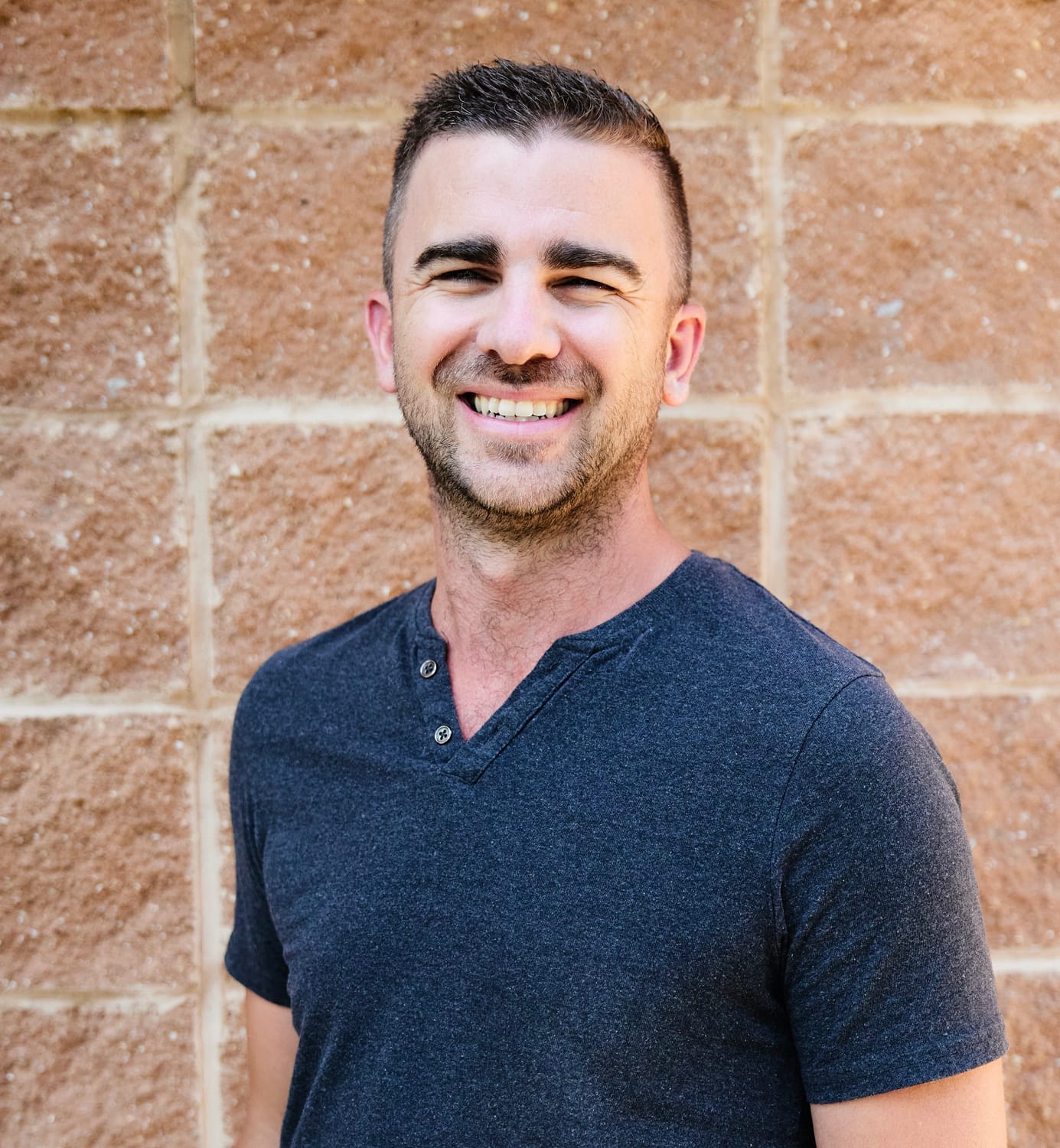
TJ Mackenzie, MA, CCC, CT
